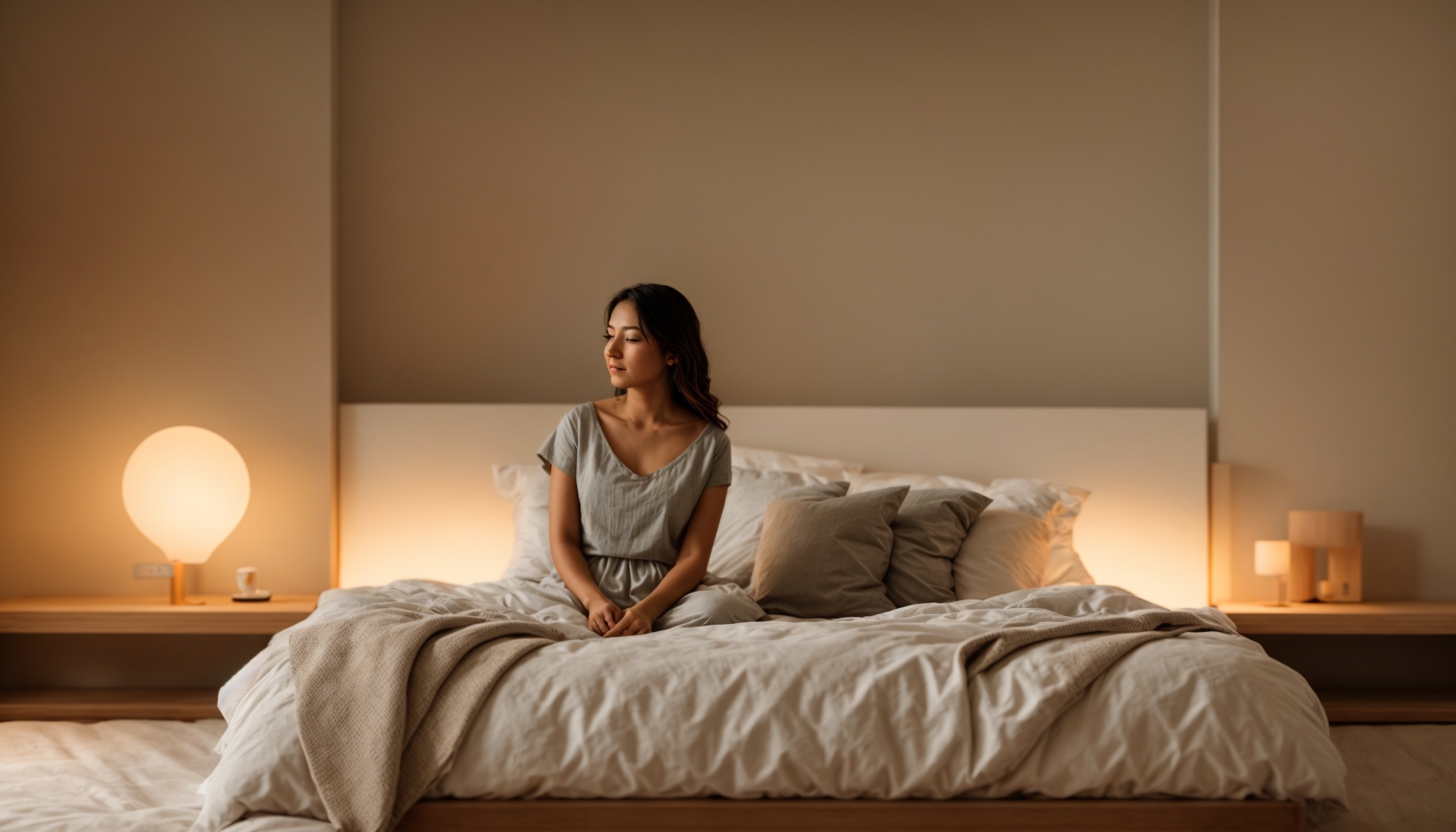
Elm Sleep – Better Sleep Tips and Sleep Health Solutions – Many homeowners now turn to a minimalist bedroom for sleep as an effective way to reduce stress and improve nightly rest.
A minimalist bedroom for sleep reduces clutter that constantly demands your attention. Visual noise keeps your brain alert and tense. A calm space sends the opposite signal. The mind recognises fewer distractions and winds down faster.
Researchers link cluttered rooms to higher cortisol levels. That stress hormone makes it harder to fall asleep. In contrast, a minimalist bedroom for sleep uses clean lines, open floor space, and limited objects. Your body then associates the room with rest instead of activity.
In addition, simpler spaces are easier to keep tidy. You spend less time cleaning and searching for items. That lower mental load supports better habits, such as going to bed on time and maintaining a stable sleep routine.
The first rule is purpose. Every object in a minimalist bedroom for sleep must earn its place. If it does not serve comfort, storage, or calm, remove it. This approach prevents slow build-up of things on nightstands, chairs, and corners.
The second rule is balance. Minimalism does not mean a cold, empty room. Instead, it combines softness and simplicity. Choose a limited colour palette and repeat it. On the other hand, avoid too many patterns or bright accents that pull your focus.
The third rule is hiding visual clutter. Closed storage keeps personal items away from sight. As a result, you preserve the clean look, while still keeping what you need close by.
The bed is the anchor of a minimalist bedroom for sleep. Choose a simple frame with clean lines and no bulky decoration. Low-profile or platform beds work especially well and keep the room feeling open.
Next, invest in a high-quality mattress that matches your sleep style. Side sleepers need more pressure relief. Back sleepers need more support. Because you remove distractions, comfort becomes the main feature of the space.
Use limited bedding layers. One fitted sheet, one flat sheet, and a duvet or blanket are enough. Avoid stacking many decorative pillows. Two sleeping pillows and maybe one accent cushion keep things tidy but still inviting.
Colour strongly shapes the mood of a minimalist bedroom for sleep. Soft neutrals such as white, beige, grey, or muted green calm the mind. Strong red or neon tones activate the brain and should stay outside the bedroom.
Lighting also matters. Use warm, dimmable lights instead of bright white bulbs. Bedside lamps with fabric shades give a gentle glow. This supports the natural release of melatonin before bed.
Meanwhile, natural light during the day helps regulate your body clock. Avoid heavy dark curtains all the time. Instead, combine blackout curtains for night with sheer curtains for daytime. This keeps your minimalist bedroom for sleep bright when you are awake and dark when you need to rest.
Good storage is the hidden engine of a minimalist bedroom for sleep. Closed wardrobes, under-bed drawers, and simple chests keep clothing and personal items out of view. Open shelves easily become messy. Use them sparingly and keep only a few carefully chosen objects.
Adopt a one-in, one-out rule for clothing and decor. After that, your belongings will stop growing beyond your storage capacity. Dirty laundry baskets with lids also protect the visual calm of the room.
Read More: How to design a truly sleep-friendly bedroom environment
Set a weekly reset routine. Spend ten minutes returning objects to their place. Because the room has fewer items, this task stays light and quick. Over time, your minimalist bedroom for sleep will remain stable and peaceful.
Electronic devices easily break the calm of a minimalist bedroom for sleep. Blue light from phones and tablets delays sleep. Notifications keep your mind alert. Whenever possible, charge devices outside the bedroom.
If you use your phone as an alarm, place it across the room. This simple step keeps it out of reach in bed. It also helps you rise on time in the morning. Additionally, consider a basic alarm clock with no bright display.
Noise control also matters. Soft textiles such as rugs and curtains absorb sound. A minimalist bedroom for sleep can still feel cosy if you choose these items in gentle tones and natural fabrics. If you live in a noisy area, use a white-noise machine with a simple design to maintain the uncluttered look.
Minimalism does not ban personality. Instead, it asks you to choose carefully. One or two framed photos, a single art piece, or a small plant are enough. These items give warmth without crowding the eye.
Consider placing one meaningful artwork above the bed. Keep the frame simple and colours calm. That focal point in a minimalist bedroom for sleep replaces the need for many small decorations.
Textiles also offer gentle personality. A textured throw, linen bedding, or a wool rug can add depth. Nevertheless, stay within your chosen colour palette to protect the sense of unity and rest.
Even the best design fails without supportive habits. A minimalist bedroom for sleep works best with a short nightly routine. Before bed, clear nightstands, close wardrobe doors, and put clothes in the hamper or back on hangers.
Because surfaces stay open and clear, cleaning is faster. Dust and allergens have fewer places to gather. As a result, air stays fresher and your breathing improves at night.
Finally, connect your wind-down rituals with the space itself. Stretching, reading a paper book, or journaling for ten minutes in your minimalist bedroom for sleep tells your brain that it is time to slow down. Over time, this association becomes powerful.
Transforming your current room into a minimalist bedroom for sleep does not require a full renovation. Start by removing excess items, then refine furniture, colours, and lighting. Take small steps over several weeks instead of changing everything in one day.
At some point, consider reviewing each object with a clear question: does this support rest? If the answer is no, store or donate it. This steady process will create a bedroom that feels light, calm, and deeply restorative.
With intention and consistency, a minimalist bedroom for sleep becomes more than a design choice. It turns into a nightly support system for your body and mind, helping you fall asleep faster, stay asleep longer, and wake up truly refreshed in your minimalist bedroom for sleep.