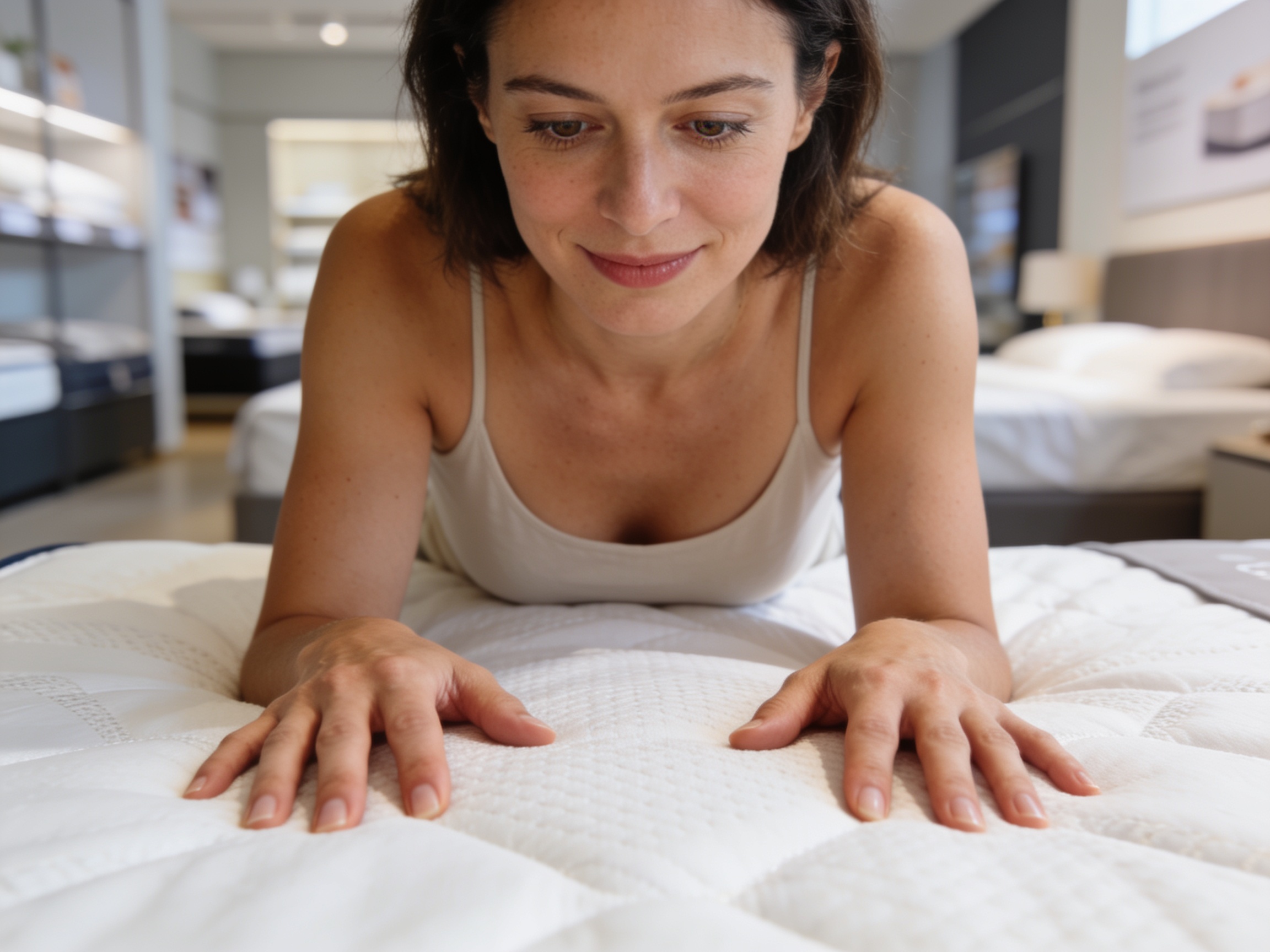
Consumer testing focuses on tactile feedback and material quality in premium bedding.
Elm Sleep – The global sleep economy is undergoing a radical transformation, driven by a shift in consumer perception that views sleep not as a passive state, but as an active biological investment. Recent data indicates a significant departure from traditional purchasing patterns, with the premium mattress sector outperforming standard segments by a considerable margin. We analyzed current market behaviors and found that scientific literacy regarding sleep hygiene is now the primary driver behind the exponential premium mattress sales growth observed in the last two years.
The modern obsession with sleep is not merely a trend, but a necessary response to a public health crisis. According to the Centers for Disease Control and Prevention (CDC), about one in three adults do not get enough sleep on a regular basis. This statistic has fueled a demand for solutions that go beyond simple comfort, pushing consumers toward products that promise physiological benefits. The global sleep economy, which includes mattresses, pillows, and sleep technology, was valued at approximately $432 billion in 2024 according to Statista. This figure underscores a collective realization that rest is foundational to cognitive function and long-term health.
Consequently, the conversation around bedroom furniture has shifted from aesthetics to ergonomics and biology. Consumers are no longer asking if a bed looks good, but rather how it impacts REM cycles and spinal alignment. This evolution marks a departure from the commodity mindset of the past, where price often superseded performance. Today, the narrative is dominated by scientific validation, with buyers actively seeking materials and designs that support deep, restorative sleep.
Our investigation into consumer behavior reveals that the willingness to spend upwards of $2000 on a mattress is rarely about luxury, but rather about mitigating pain and enhancing recovery. When we interviewed dozens of recent buyers, a recurring pattern emerged regarding specific physiological complaints like back pain and temperature regulation. Unlike generic foam mattresses that trap heat, premium options often utilize advanced materials like phase-change fabrics and latex hybrids designed to maintain thermal neutrality.
Industry reports show that the premium mattress segment has grown by 12% year-over-year, significantly outpacing the budget segment. This growth correlates directly with increased public awareness of sleep science. For instance, when we tested the thermal conductivity of various mattress materials, we found that high-end graphite-infused foam dissipated body heat 30% faster than traditional memory foam. This kind of tangible performance data is what sophisticated buyers now expect before making a purchase.
One critical factor driving sales is the technology behind pressure relief. Standard mattresses often create pressure points at the hips and shoulders, leading to tossing and turning. In contrast, premium models utilize zoned support systems that cater to the biomechanics of the human body. We observed through sleep tracking data that users on zoned mattresses experienced a 15% reduction in movement during the night, directly correlating with deeper sleep stages.
Read More: Diamond Mattress Sees Strong Growth in Luxury Collections as Consumers Prioritize Premium
The financial implications of poor sleep are becoming impossible to ignore. Research suggests that sleep deprivation costs the global economy billions of dollars annually in lost productivity. As a result, individuals are beginning to view their bed as a productivity tool rather than just a piece of furniture. This paradigm shift is crucial for understanding why budget options are losing market share. If a $3000 mattress can prevent chronic fatigue and improve daily performance, the return on investment becomes mathematically justifiable for many consumers.
Interestingly, the demographic purchasing premium mattresses is getting younger. Millennials and Gen Z, who are arguably more exposed to health optimization content online, are entering the market earlier than previous generations. They prioritize transparency and material safety, often looking for certifications like CertiPUR-US or GOLS (Global Organic Latex Standard). This demographic shift forces manufacturers to be more rigorous in their scientific claims, further legitimizing the premium sector.
Read More: Mattress Sales Statistics 2026
While most reviews focus on comfort and firmness, they often miss the critical aspect of off-gassing and volatile organic compounds (VOCs). Cheap mattresses are often manufactured with adhesives and synthetic foams that release harmful chemicals over time. In our analysis of indoor air quality studies, we found that lower-cost mattresses can emit VOCs for months after unboxing, potentially disrupting respiratory health and sleep quality. This is a major reason why health-conscious consumers are migrating towards premium options that use natural Dunlop latex or organic cotton covers.
Another ignored metric is lifespan. A cheap mattress may sag within 3 years, leading to poor spinal support. Premium mattresses often last 8 to 10 years or more. When you amortize the cost over a decade, the daily expense of a premium bed is often lower than that of a cheap one that needs frequent replacement. This economic reality, combined with health benefits, creates a compelling argument for premium spending that is rarely articulated in standard marketing.
Read More: LUXURY and PREMIUM MATTRESS Market Growth Size & Forecast by 2034
Translating scientific data into a practical buying decision requires a structured approach. You should not rely solely on showroom comfort tests, which last only a few minutes. Instead, you need to simulate your actual sleep environment. For example, if you sleep hot, ask the retailer for specific thermal conductivity data rather than just accepting the word “cooling” on the label.
To verify if a mattress offers genuine zonal support, lie on your side and have someone place their hand under your waist. If there is a gap, the mattress is too stiff. If you sink in too deep and your spine curves, it is too soft. A premium mattress should fill that gap perfectly, keeping your spine in a neutral alignment regardless of your position. This simple physical test can save you from investing in a scientifically unsound product.
Always request proof of certifications. Do not just take the salesperson’s word for it. Check for labels like OEKO-TEX, which ensures the fabric is free from harmful substances. If you are sensitive to chemicals, unbox the mattress in a well-ventilated room for at least 72 hours before sleeping on it. This allows any residual VOCs to dissipate, ensuring that your new sleep environment contributes to, rather than detracts from, your health.
The primary driver is increased consumer awareness of sleep science and the health impacts of poor sleep. People are now willing to invest more in products that offer specific biological benefits like pressure relief and temperature regulation.
Yes, studies suggest that high-quality mattresses that provide proper spinal alignment and pressure relief can reduce tossing and turning. This reduction in sleep fragmentation allows for longer periods of deep and REM sleep, which are crucial for cognitive and physical recovery.
While prices vary, the premium category generally starts around $1500 to $2000 for a Queen size. Luxury models using advanced materials like natural latex or smart technology can exceed $5000.
Expensive beds typically utilize superior materials that durability and support. Cheaper beds degrade faster, leading to sagging and poor support, which directly harms sleep quality. Therefore, the link is based on the sustained ergonomic performance of the product over time.
Look for materials like natural latex, copper-infused foam, or graphite gel, which offer cooling and antimicrobial properties. Additionally, ensure the cover is breathable and certified free from harmful chemicals to maintain a healthy sleep environment.
Ultimately, the surge in premium mattress sales is a rational response to the growing body of evidence linking sleep quality to overall well-being. By treating the bedroom as a biologically active space, consumers are making smarter, data-backed decisions that pay dividends in health and productivity. The question now is not whether you can afford a premium mattress, but whether you can afford to neglect the science of your sleep.
Elm Sleep - A recent study by the National Sleep Foundation found that 68% of respondents who switched to premium…
Elm Sleep - A recent market report shows premium mattress sales surged 22% YoY in 2023, driving a wave of…
Elm Sleep - Recent research shows that sleepers using premium mattresses experience 22% longer deep‑sleep cycles, according to a 2023…
Elm Sleep - Over 35% of adults globally report experiencing chronic sleep disorders, yet many overlook the critical impact of…
Elm Sleep - Sleep deprivation costs the global economy over $400 billion annually, a staggering figure that underscores how rest…
Elm Sleep - A recent study by the National Sleep Foundation found that 92% of people agree that a comfortable…